
Caulking in Lavaltrie
Repair of window, door and masonry joints in Lavaltrie and the MRC de D'Autray.RBQ license, CCQ competency card, supplier recommended by CAA-Quebec and 10-year limited warranty. We travel from Laval on Highway 40 and work in Lavaltrie year-round.
Un calfeutreur qui connaît Lavaltrie
Lavaltrie comptait 14 425 résidents au recensement de 2021, une hausse de 5,6 % en cinq ans, et les estimations récentes situent la population autour de 15 800. Ces gens se répartissent sur environ 68 km² étirés le long du fleuve Saint-Laurent, ce qui donne deux réalités de bâtiment qui n’ont presque rien en commun. D’un côté, un noyau ancien serré autour du chemin du Roy, avec ses maisons victoriennes et son église à deux clochers. De l’autre, des quartiers pavillonnaires ajoutés par vagues successives depuis les années 1980, plus une couche de développements récents qui continue de s’étendre vers l’intérieur des terres.
Un joint de scellant ne vieillit pas de la même façon dans ces deux mondes. Sur une façade de pierre du XIXe siècle, le problème est presque toujours un joint de maçonnerie creusé par deux siècles d’eau et de gel. Sur un bungalow de 1988, c’est un scellant de première génération qui a durci et qui lâche partout la même année. Sur une maison livrée en 2019, c’est un cordon posé trop vite qui s’est rétracté au bout de trois hivers. Nous traitons les trois, et nous ne les traitons pas pareil.
Calfeutrage Élite détient une carte de compétence CCQ et une licence RBQ, respecte les règlements de la CNESST sur tous ses chantiers, figure parmi les fournisseurs recommandés par CAA-Québec et offre une garantie limitée de 10 ans sur ses travaux. Vous pouvez voir nos réalisations, nos photos de chantier et nos vidéos, ou lire comment se déroule un mandat avant de nous appeler.
Why joints fail faster in Lavaltrie
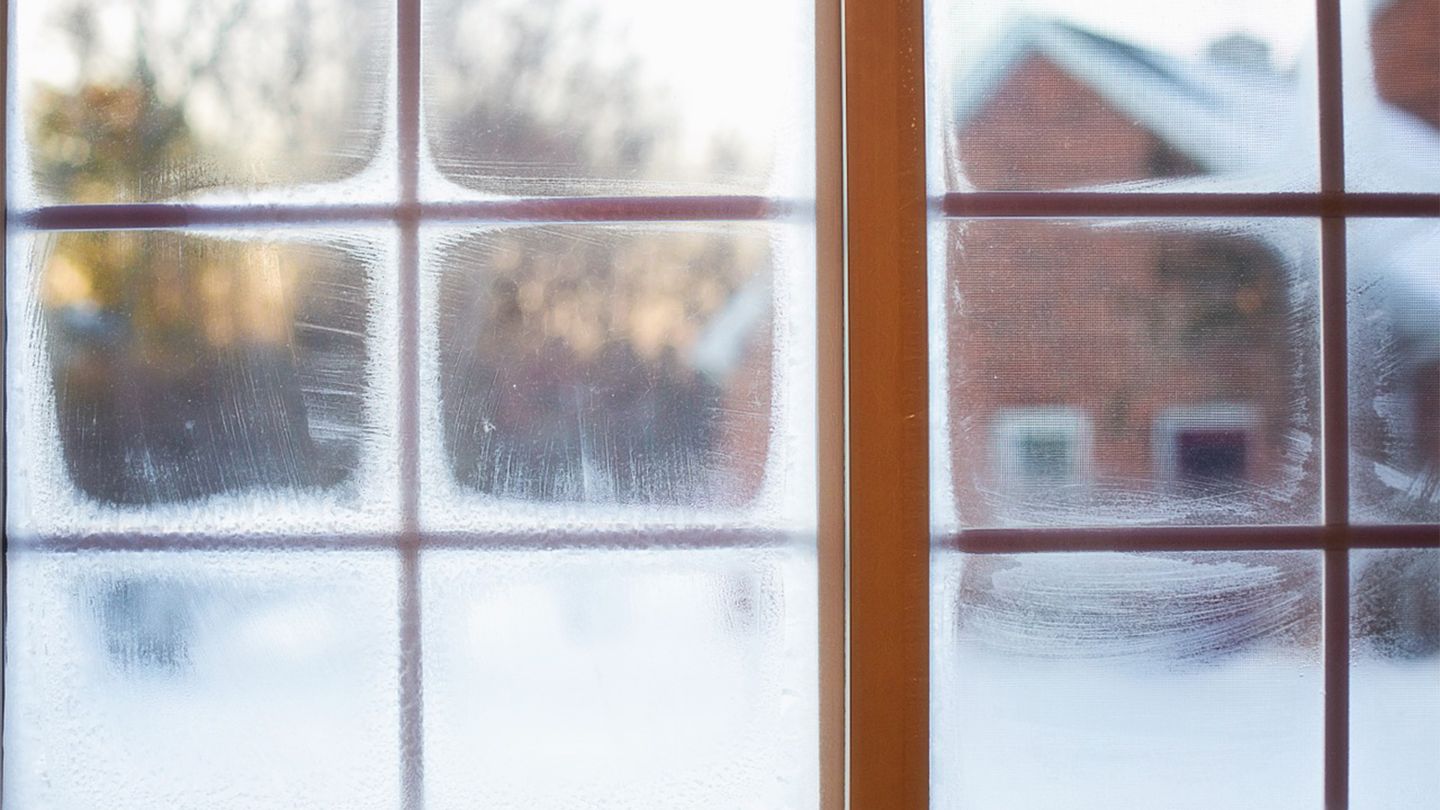
The St. Lawrence River borders the entire length of the city, and it changes the local climate in two ways that count as caulks. It keeps the air more humid than inland, and it softens extremes. A milder winter is good news, except that what destroys a sealant cord is not the sustained cold, it’s the repeated passages on either side of zero. Each passage freezes the water lodged in a crack, causes it to swell, and then releases it. A waterfront area crosses this threshold more often than an area forty kilometres to the north.
Added to this is the exposure. Residences facing the river absorb wind and humidity on one side only, almost always the same. On these houses, we regularly see a sealant that is still correct on three sides and completely cracked on the fourth. Having only the exposed façade redone is often the most profitable move of the year.
The old village has one more constraint. Chemin du Roy follows the highest point of the territory, and its route had to be redeveloped after the flood and landslide of 1865. The buildings that line this section therefore rest on a ground that has moved, and that still moves a little each spring. A rigid joint on a façade that is working tears; an elastomeric sealant follows the movement. This is the kind of detail that decides the duration of the work, and it does not read on a photo.
Finally, Highway 40, Highway 31 and Highway 138 run through or along the city. Buildings near these roads accumulate dust and vibration, two things that shorten the life of a joint and make the question of when to redo joints is more pressing than elsewhere.
The sectors of Lavaltrie, one by one
Here is what we encounter most often depending on where the building is located. The construction ages are given in order of magnitude; we always validate them on site before proposing anything.
| Dominant Built | Area | What we see most often |
|---|---|---|
| Old village, along Chemin du Roy | Nineteenth-century Victorian houses, stone and wood | Hollowed mortar joints, worn spandrels, windows replaced without proper sealant rework |
| Riverfront Water-facing | residences, mixed ages | Only one deteriorated façade, the one that takes the wind and humidity of the river |
| Saint-Antoine-de-Lavaltrie sector | Former village merged with Lavaltrie in 2001, mixed building | Original joints never redone, several materials meeting on the same façade |
| Residential neighbourhoods of the 1980s and 1990s | Bungalows and cottages, brick and cladding | First generation sealant that has reached the end of its life everywhere at the same time |
| Recent developments, after 2005 | Single-storey houses, semi-detached houses, a few multi-dwelling units | Cordons installed quickly at the end of the work, visible removal from the third or fourth year |
| Surroundings of Gérard-Lavallée Park | Residential from the 1970s to 1990s | Patio doors and window flashings at the end of their life, thresholds that take on water |
| Highway 40 and Highway 131 Corridor | Commercial and Light Industrial, Flat Roofs | Open Expansion Joints, Decoupled Prefabricated Panels, Improperly Sealed Mechanical Units |
| Inland agricultural rows | Farm houses and accessory buildings | Total exposure to wind, no screen, uniform degradation on all sides |
If your sector does not appear in this table, it does not mean that we are not going there. It means that we do not yet have enough construction sites in this area to assert a recurring motif, and we prefer to remain silent rather than invent.
Signs that should make you call
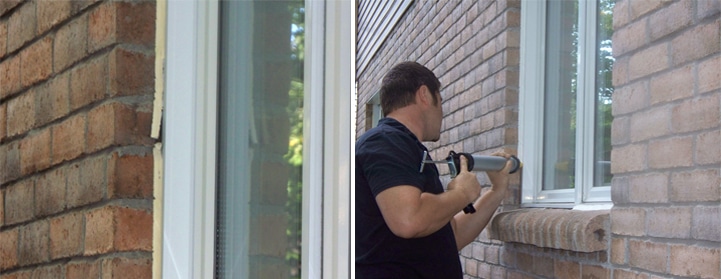
Most of our customers in Lavaltrie call us for a symptom, not for a joint. Here are the most common ones and the page that explains each one.
- A draft of air perceptible near a window frame when the wind rises from the river, often the first sign of air infiltration.
- A trace of water or a halo on the gypsum under a window sill, which indicates water infiltration that has already settled.
- Fog between the two panes, a sign that the thermos sealant has given way and that you should look at replacing the thermos glass.
- A hardened, chalky bead of sealant that comes off into a strip when scratched off with a fingernail. Now is the time to replace the window sealant.
- Mortar crumbling between the bricks, or a cracked sill that lets water in from above rather than away from the wall.
- A heating bill that goes up for no reason, which ties in with the question of energy savings and the return on investment of the work.
- Insects or rodents entering through a point that you can’t locate, a classic case of pest caulking.
- A patio door or window that forces the opening, which is often more about parts and mechanisms than sealant.
When the entry point is nowhere to be found, infrared camera thermographic inspection solves the matter in one visit. It makes leaks visible that the eye can’t see, and we use it both for pre-diagnosis and post-work verification.
How we do it
- On-site visit and survey. We measure the openings, note the materials present and identify the most exposed facades. We travel because a fair quote cannot be made remotely, and we explain why in our page on quotes.
- Written and detailed quote, with quantities, product and colour. What causes an amount to vary is explained in the page on the price of caulking.
- Complete removal of the old sealant. No new bead on top of the old one: the old product will come off sooner or later and take the new one with it.
- Surface preparation. Dusting, cleaning, priming if the substrate requires it, and installing a joint base to give the bead the correct geometry.
- Application of the sealant chosen according to the substrate and exposure, then smoothing to form a surface that rejects water instead of retaining it.
- Final inspection with you, cleaning of the site and delivery of the warranty. Payment is made at the end, once the work has been accepted.

Which sealant for which use
The product is chosen based on the substrate, the expected movement of the joint and the exposure. Here are the families we use and what each one does well.
| Family | Where she gives her best | Limits to know |
|---|---|---|
| Polyurethane | Masonry joints, spandrels, exposed window perimeters. Good resistance to movement and paintable. | Sensitive to prolonged UV depending on the formulation, longer curing time in cold weather. |
| Silicone | Glass, aluminum, non-porous surfaces, powder rooms. Excellent durability and flexibility. | Does not paint and adheres poorly to unprimed porous substrate. |
| Hybrid, MS polymer | Mixed facades where silicone and polyurethane cross on the same wall. | Higher cost; the choice is justified by the configuration, not by principle. |
| Acrylic latex | Interior touch-ups, mouldings, joints without movement. | avoided outdoors in Quebec: it hardens and splits in a few winters. |
| Expanding foam | Fill a void behind a frame, at the bottom of a cavity only. | It is not a sealant. Left on the surface, it absorbs water and degrades with UV rays. |
In detail, the choice between silicone and polyurethane depends mainly on the substrate. We commonly work with Sonneborn’s NP1, Mulco products and Adfast’s Adseal 4580. For the shade, there are more shades than you think: see the type and colour of the sealant, the difference between white and ultra white, and when white sealant is the right call.
What goes up or down a quote
We don’t publish prices, because a number displayed without having seen the building is fiction. Instead, here are the variables that actually weigh on the amount, so that you can assess your own situation before you even call us.
| Variable | Effect on the amount |
|---|---|
| Total length of joint | The main station. A house with six openings and a house with twenty are not comparable. |
| Removing the old sealant | An old, well-adhered polyurethane takes much longer than a brittle latex. |
| Height and access | Beyond the second floor, you need a cherry picker, sometimes a lifting permit, or rope work. |
| Condition of the masonry | If the mortar needs to be redone, the masonry joint precedes the caulking and is added to the mandate. |
| A | hybrid costs more than a standard polyurethane, and is justified by the configuration of the wall. |
| Season | Work in cold weather slows down the cure and lengthens the worksite. |
| Preliminary diagnosis | Thermography is added to the mandate, but it often avoids redoing joints that did not need it. |
If your work is part of a larger renovation, the LogiRénov program is worth looking at. And if you’re hesitant to caulk yourself, this page is honest about what you can do on your own and what goes wrong.
Shops, condos and institutional buildings
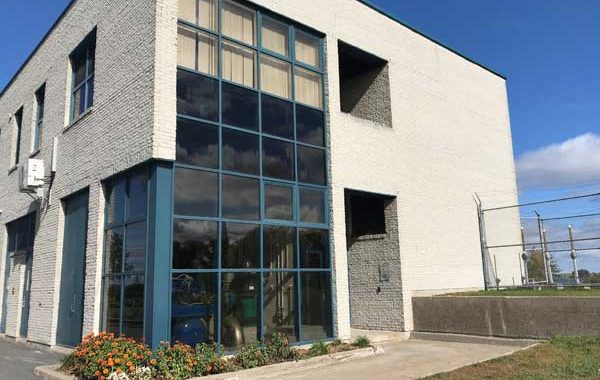
The corridor of Highway 40 and Route 131 concentrates the shops, warehouses and services of Lavaltrie. These buildings have a different signature from residential: flat roofs, prefabricated panels, long vertical expansion joints, and mechanical units on the roof whose perimeter is almost always the first point to give way. We work on this type of park in commercial caulking and industrial caulking, and you can see a complete commercial site in our achievements.
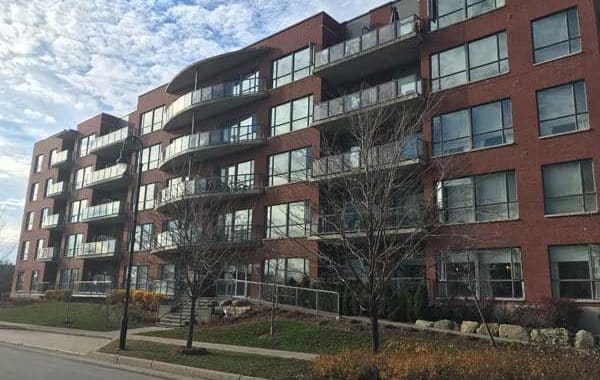
For condominium buildings, the logic is not the same as for a house. A syndicate must plan a repair on the entire envelope rather than plugging opening by opening, otherwise the budget goes into one-off interventions that solve nothing. This is the purpose of our pages on condominium caulking and condominium work, with an example of a mandate to support it.
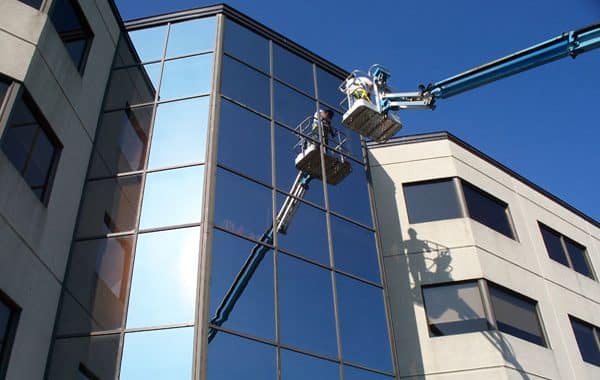
When a building exceeds two floors, access becomes the real issue. We do caulking at height, in a basket or on a rope depending on the configuration, and we also offer the rental of articulated platforms in Greater Montreal. A construction site at height is documented in the portfolio.
Institutional buildings, schools and multi-unit buildings add the obligation of fire caulking to wall and floor penetrations. The installation of fire joints obeys specific requirements and is documented, and we show a concrete case.
The heritage of Chemin du Roy
The seigneury of Lavaltrie was granted on October 29, 1672 by Intendant Jean Talon to Séraphin Margane, Sieur de la Valterie, an officer in the Carignan regiment. Three and a half centuries later, a dense village core remains: the church erected in 1869 with its two bell towers, the Victorian houses lined up along the Chemin du Roy, the seigneurial manor house in the Saint-Antoine sector, the Rosalie-Cadron house, and a redeveloped wharf that served for more than two hundred years as a transit point to the river.
On these buildings, modern caulking is practiced with restraint. A joint that is too rigid on old masonry creates a constraint that the stone ends up absorbing by cracking, and the remedy becomes worse than the disease. We are therefore working on the flexibility of the masonry joint and the reworking of the spandrels, which are the room that decides whether the water moves away from the wall or rushes into it. The colours are also more finely chosen on a heritage façade than on a bungalow.
The calendar of a year in Lavaltrie
Outdoor caulking has a useful season, and it is shorter than we would like. Here is how we divide the year.
| Period | What is being done | Why |
|---|---|---|
| April and May | Inspection of winter damage, first outdoor construction sites | The frost has come out of the walls and the cracks opened by the winter are still visible |
| June to September | High season: complete repair, masonry, work at height | Ideal temperatures and humidity levels for curing sealants |
| October and early November | Last outdoor work, priority given to facades exposed to the river | Last window before the cold compromises the adhesion |
| November to March | Diagnostics, thermography, interior, firebreak, spring planning | The infrared camera is more reliable when the gap between indoors and outdoors is large |
So winter is the best time to have a problem diagnosed, and spring is the best time to fix it. Our ten quick tips cover what you can monitor yourself between visits.
Our Services
- Window Caulking
- Masonry Joint
- Masonry and Caulking
- Spandrels
- Masonry and Spandrel
- Commercial Caulking Industrial
- Caulking
- Condominium Caulking
- Condominium Work Fire
- Calulking
- Installation of fire seals
- Caulking at height
- Work on rope
- The basket
- Lifting permits Rental
- of boom lifts
- Replacement of thermos windows
- Parts and mechanisms
- Thermography
- Inspection by infrared camera
- Thermography and Infiltration
- Pest Control Caulking
- North Shore
Achievements
- Window Caulking
- Commercial Construction Site
- Condominium
- Work at Height
- Fire Rated
- CAA
- Portfolio
- All Projects
- Photos
- Videos
Site
Sealants Products
- Sonneborn
- Silicone or Polyurethane
- NP1
- Sealants
- Adfast Mulco
- Adseal 4580
- Sealant White
- White or White Ultra
- Type and Color
Advice and diagnosis
- When to redo the joints
- When to replace the sealant
- Air infiltration
- infiltration
- Steam on the windows
- Energy savings
- A profitable investment
- Ten quick tips
- Caulking yourself
- LogiRénov
Water
The company
Our other city pages
Lanaudière
- Repentigny
- Charlemagne
- L’Assomption
- Lachenaie
- Terrebonne
- Mascouche Joliette
Laurentides and North Shore
- Saint-Jérôme
- Saint-Colomban
- , Saint-Lin-Laurentides,
- Sainte-Anne-des-Plaines,
- Blainville
- , Boisbriand
- , Sainte-Thérèse
- Rosemère
- , Lorraine
- , Bois-des-Filion
- Mirabel
- , Saint-Eustache
- , Sainte-Marthe-sur-le-Lac
- , Deux-Montagnes
,
,
Laval
- Laval
- Chomedey
- Sainte-Rose
- , Vimont
- Duvernay
- Pont-Viau,
- Laval-des-Rapides
- , Auteuil
- Fabreville
- Laval-Ouest
- Sainte-Dorothée
,
,
,
,
,
,
South Shore
- Longueuil
- , Brossard,
- Boucherville,
- Candiac, La Prairie
- Saint-Lambert
- Saint-Constant,
- Carignan
- , Sainte-Catherine
- , Saint-Philippe
- Chambly
- Saint-Basile-le-Grand
- Mont-Saint-Hilaire
- Beloeil
- McMasterville
- Sainte-Julie
- Varennes
- Saint-Bruno-de-Montarville
- Saint-Jean-sur-Richelieu
- Châteauguay
,
,
Elsewhere in Quebec
See the job before you order
The steps of caulking a window, from removing the old cord to the final smoothing, in just over a minute.
Why we travel
The reason why a serious bid requires an on-site visit, explained simply. This applies as much to Lavaltrie as to the rest of our territory.
Our service area around Lavaltrie
Lavaltrie belongs to the MRC de D’Autray and is located on Chemin du Roy, between Saint-Sulpice to the southwest and Lanoraie to the northeast. Going down to Montreal on Route 138 and Highway 40, then going up Lanaudière and the Laurentians, we cover a good part of the North Shore.
The immediate corridor
Repentigny, Charlemagne, L’Assomption, Lachenaie, Terrebonne and Mascouche.
Lanaudière and the Laurentians
Joliette, Saint-Lin-Laurentides, Sainte-Anne-des-Plaines, Bois-des-Filion, Lorraine, Rosemère, Sainte-Thérèse, Blainville, Boisbriand, Mirabel, Saint-Jérôme, Saint-Colomban, Saint-Eustache, Sainte-Marthe-sur-le-Lac and Deux-Montagnes.
Laval, the South Shore and elsewhere
Our base is in Laval. We also serve Longueuil, Brossard, Boucherville, Varennes, Sainte-Julie, Saint-Bruno-de-Montarville, Chambly, Beloeil, as well as Saint-Hyacinthe and Drummondville. The overview can be found on our North Shore Caulking page.
Frequently asked questions about caulking in Lavaltrie
Do you caulk in Lavaltrie all year round?
How long does caulking last in Lavaltrie?
My house in the old village is made of stone. Is it the same job?
Only one façade is damaged. Do I have to redo everything?
Do you give prices over the phone?
My window has fog between the panes. Will the caulking fix that?
Do you work on the businesses and buildings in the Highway 40 area?
Can I caulk myself?
How long does it take to visit Lavaltrie?
Further answers can be found on our Q page, and details of how we work on processes and deadlines.
Request a quote in Lavaltrie
Describe your building and what you observe. We schedule a visit, we measure on site and you receive a detailed, no-obligation written quote.
Phone: 450-473-3548
Email: info@calfeutrage-elite.com
RBQ license, CCQ competency card, compliance with CNESST regulations, supplier recommended by CAA-Quebec, 10-year limited warranty.
Population data: 2021 Statistics Canada census and subsequent estimates. Historical landmarks: grant of the seigneury in 1672, church of 1869, redevelopment of the Chemin du Roy after the flood of 1865.
